

-
Original Paper
- Effects of White Water Fractionation by Two-Step Hydrocyclone Cleaning on Drainage and Strength Properties of OCC Recycled Paper
- Jee-Woong Rim, Jeong-Yong Ryu
- In recycled old corrugated container (OCC) papermaking, the accumulation of ash and fines in white water adversely affects dewatering efficiency, runnability, and …
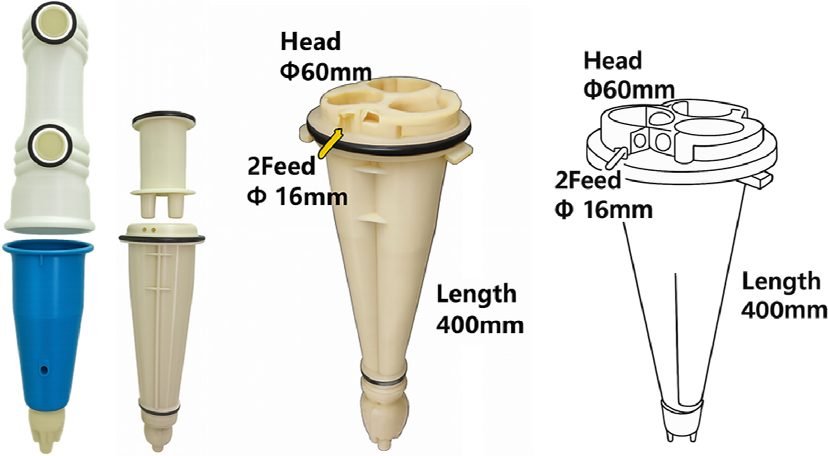
- In recycled old corrugated container (OCC) papermaking, the accumulation of ash and fines in white water adversely affects dewatering efficiency, runnability, and paper strength. Excessive inorganic ash interferes with fiber-to-fiber bonding, whereas organic fines can contribute to sheet consolidation and strength development. An effective white water treatment strategy should therefore selectively remove detrimental ash while retaining fines beneficial to paper properties. In this study, OCC process white water was fractionated using a hydrocyclone system, and two methods were compared: fractionation using two accept-recirculation cleaning loops and fractionation using a Tetradeca-cleaning system followed by an accept-recirculation cleaning loop. The distribution of suspended solids was evaluated through thickening factor and ash content analyses, and the fractionated white water streams were reintroduced into recycled OCC furnish to assess drainage and paper strength. Freeness and wet-web air permeability resistance were measured as dewatering indicators, and burst index, compressive index, and internal bonding strength were evaluated for handsheets prepared with each fraction. Both methods achieved effective separation, concentrating ash in reject streams while accept streams retained relatively lower ash content. Both methods also improved drainage, particularly when secondary-pass cleaner reject fractions were applied, owing to the higher proportion of coarse and high-density ash particles favorable for water removal. Paper strength was generally improved when secondary-pass cleaner accept fractions were added, indicating that fines beneficial to fiber bonding were selectively retained. Among all conditions, the secondary-pass accept fraction exhibited the highest burst, compressive, and internal bonding strengths. Comparing the two methods, the Tetradeca-cleaning system followed by an accept-recirculation cleaning loop provided more stable and greater strength improvements than the two accept-recirculation cleaning loops, although both exhibited comparable fractionation efficiency and drainage enhancement. This was attributed to the Tetradeca-cleaning system’s ability to preserve useful fines more effectively while progressively removing strength-reducing ash particles. These results indicate that two-step hydrocyclone treatment of OCC white water can be an effective strategy for improving recycled paper quality. The two accept-recirculation cleaning loops offer advantages in operational simplicity, whereas the Tetradeca-cleaning system followed by an accept-recirculation cleaning loop is more beneficial when improving paper strength is the primary objective. - COLLAPSE
-
Original Paper
-
Raw Materials of Hanji Used for Ancient Books
고문헌 책지에 사용된 한지 원료
-
Oh-Kyu Lee, Seokju Kim, Sora Lee, Kwon-Heui Nam, Hui Sub Ahn, Hyung Won Lee
이오규, 김석주, 이소라, 남권희, 안휘섭, 이형원
- To identify the raw materials of Chaekji (Hanji for bookmaking) used to produce ancient Korean books, microscopic analysis was conducted on 99 …
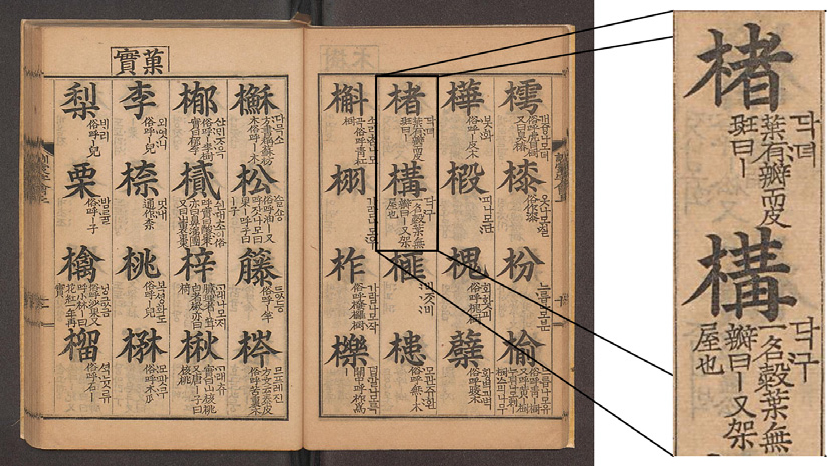
- To identify the raw materials of Chaekji (Hanji for bookmaking) used to produce ancient Korean books, microscopic analysis was conducted on 99 paper specimens taken from metal or wooden movable-type and woodblock-printed books dating from the Goryeo and Joseon dynasties. The specimens were disintegrated into individual fibers and stained with Graff “C” stain. Fiber types were identified through morphological observation and color reactions. Plant fibers historically used as papermaking raw materials and modern handmade paper samples of known compositions were employed as reference controls for fiber identification. Comparative analysis of the 99 microscopic images against the reference materials revealed that 81 specimens consisted solely of Daknamu (Broussonetia × kazinoki Siebold) bast fibers, while the remaining 18 specimens either lacked Daknamu bast fibers or comprised mixed plant fibers. Among these, 10 specimens were identified as Gojeongji made from a mixture of Daknamu and rice-straw fibers; 2 specimens were bamboo paper (Jukji); 1 specimen was hemp paper (Maji); 1 specimen was Anpiji made from Wikstroemia trichotoma fibers; 1 specimen consisted of a mixture of W. trichotoma and rice-straw fibers; 1 specimen was a mixture of Daknamu and bamboo fibers; and 2 specimens contained a mixture of three fiber types: Daknamu, W. trichotoma, and rice-straw fibers. In this study, Chaeckji manufactured from the 11th to the 14th century using fibers other than Daknamu bast fibers were rarely observed. However, in the 15th century, numerous cases were observed in which rice straw, bamboo, and W. trichotoma fibers were used as substitutes for Daknamu bast fibers, coinciding with frequent large-scale state-sponsored book production projects. Although mixed-fiber papers continued to appear sporadically after the 16th century, their frequency decreased markedly compared with the 15th century. These observations suggest that the extensive use of substitutes for Daknamu bast fibers was primarily driven by the need to meet increasing demand for paper in the 15th century. - COLLAPSE
-
Raw Materials of Hanji Used for Ancient Books
-
Original Paper
-
Insights into Research Trends in a Korean Pulp and Paper Journal Using Text Mining and Topic Modeling
텍스트 마이닝과 토픽 모델링을 활용한 국내 펄프·제지 학술지의 연구동향 분석
-
Yong Ju Lee, Soon Wan Kweon, Tai-Ju Lee, Hyoung Jin Kim
이용주, 권순완, 이태주, 김형진
- This study analyzes the evolution of research themes in Korean pulp and paper science employing Scopus-indexed metadata from articles published in the …
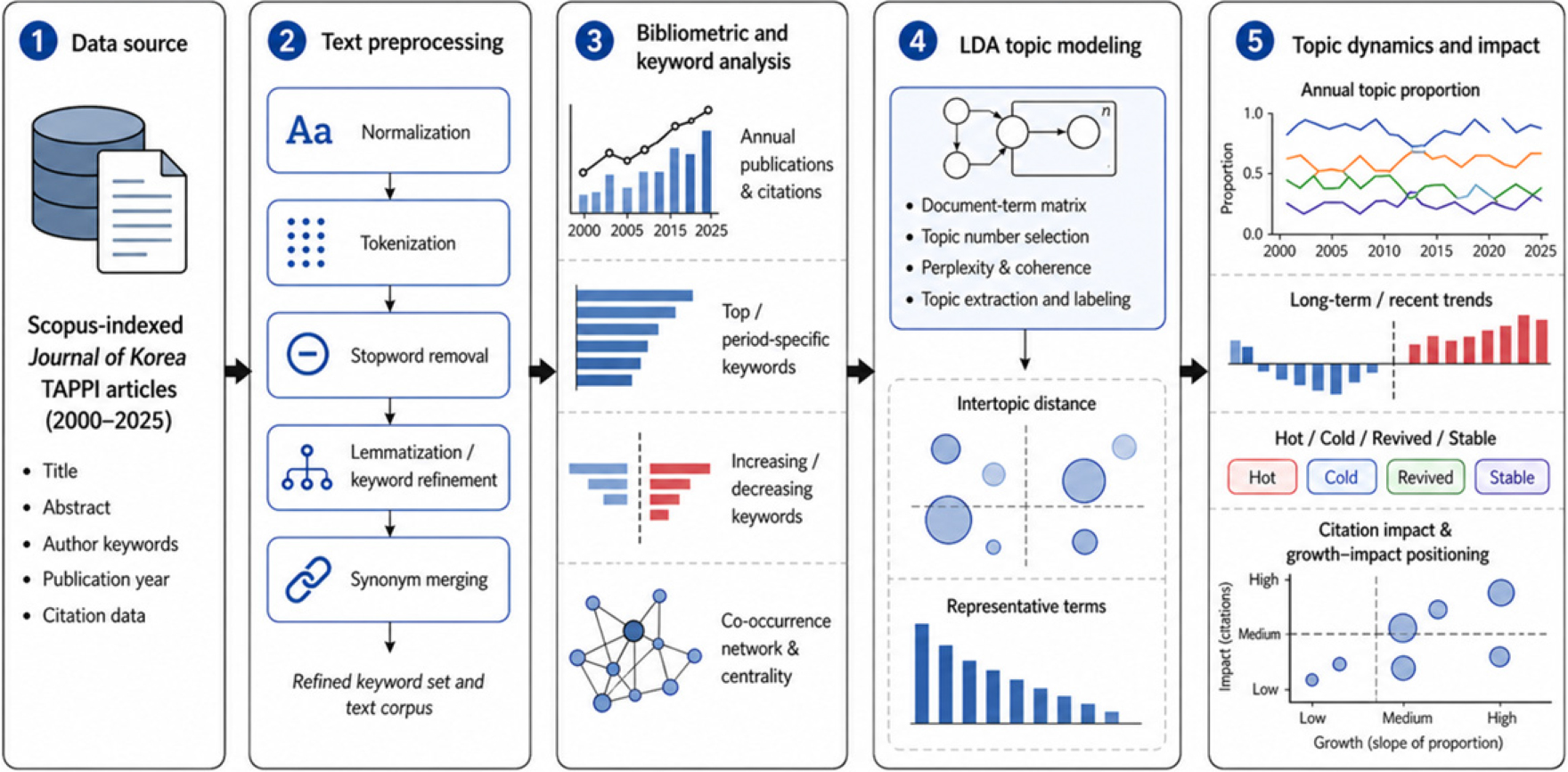
- This study analyzes the evolution of research themes in Korean pulp and paper science employing Scopus-indexed metadata from articles published in the Journal of Korea TAPPI (KTAPPI) between 2000 and 2025. A total of 1,583 records were collected and examined using text mining, refined keyword analysis, keyword co-occurrence networks, latent Dirichlet allocation topic modeling, topic life-cycle classification, and citation impact analysis. The results confirmed that traditional research themes, including wet-end additives, pulping and bleaching, coating and printability, and recycling and drainage, formed the historical foundation of KTAPPI research but have declined in relative prominence in recent years. Conversely, topics associated with nanocellulose, instrumental characterization, natural fiber modification, and biomass-based applications have gained increasing importance. These findings suggest a gradual shift from conventional process- and property-centered studies toward functional materials, sustainability-oriented applications, and data-driven characterization approaches. Overall, this study provides a quantitative overview of the evolution of research themes in KTAPPI. - COLLAPSE
-
Insights into Research Trends in a Korean Pulp and Paper Journal Using Text Mining and Topic Modeling
-
Original Paper
-
Double-Layer Barrier Coating of Paperboard Using Cationic Cellulose Micro/Nanofibers and Waterborne Acrylic Water-Repellent Agent
양이온화 셀룰로오스 마이크로/나노섬유와 아크릴 발수제를 이용한 판지의 배리어 코팅 연구
-
Ji Hyun Tak, Min Seo Kim, Ji Young Lee
탁지현, 김민서, 이지영
- In this study, a double-layer coating system to improve the barrier properties of linerboard was developed using either a quaternized cellulose microfiber …
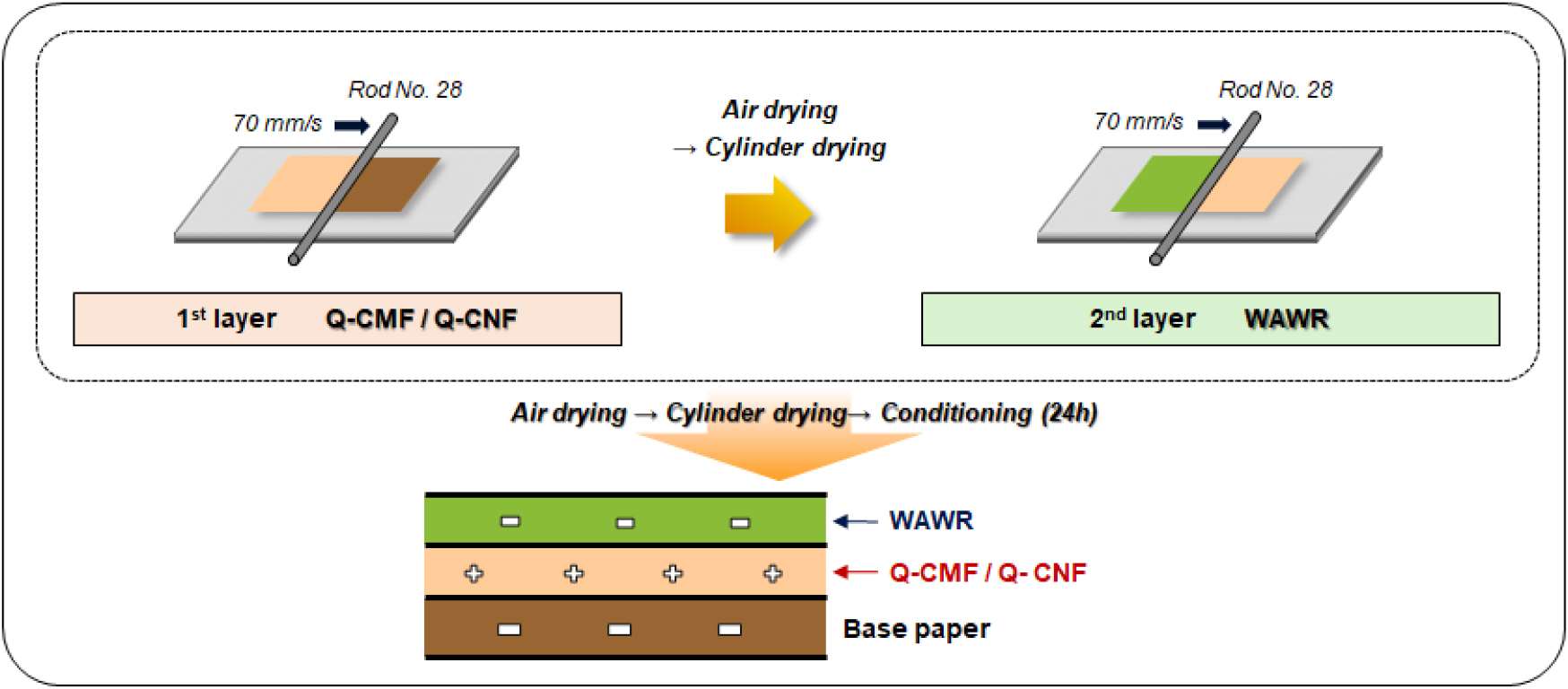
- In this study, a double-layer coating system to improve the barrier properties of linerboard was developed using either a quaternized cellulose microfiber (Q-CMF) or a quaternized cellulose nanofiber (Q-CNF) layer and a waterborne acrylic water-repellent agent (WAWR) layer. Q-CMFs and Q-CNFs were prepared from bleached hardwood kraft pulp and modified via a quaternization reaction using glycidyltrimethylammonium chloride. The cationic cellulose fibers were applied as a pre-coating layer, followed by top coating with an anionic WAWR. The effects of the degree of fibrillation on coating performance and barrier properties were systematically evaluated. The results showed that Q-CNF exhibited higher viscosity and zeta potential than Q-CMF due to its greater degree of fibrillation and larger specific surface area. In the single-layer coating system, Q-CNF formed a denser coating structure by effectively filling inter-fiber pores, resulting in superior air barrier performance. However, cellulose-only coatings exhibited limited water repellency due to the hydrophilic properties of the cellulose. In the double-layer coating system, the Q-CNF/WAWR-coated paper exhibited the best overall performance. Despite having approximately 20% lower coat weight (6.3 g/m2) than the Q-CMF/WAWR coating, the Q-CNF/WAWR exhibited an enhanced burst strength of 11.9 kgf/cm2 and excellent barrier properties. The air resistance increased to 545 s, approximately 12 times that of the uncoated linerboard, while the water repellency achieved the highest grade, R10. FE-SEM analysis confirmed that the Q-CNF effectively sealed the porous paper by forming a dense coating layer. Furthermore, electrostatic interactions between the cationic Q-CNF and the anionic WAWR coating improved coating adhesion and suppressed excessive penetration of the coating liquid into the paper. These results demonstrate that the Q-CNF/WAWR-based double-layer coating system is a promising, recyclable, and environmentally friendly barrier technology for food and consumer goods packaging applications. - COLLAPSE
-
Double-Layer Barrier Coating of Paperboard Using Cationic Cellulose Micro/Nanofibers and Waterborne Acrylic Water-Repellent Agent
-
Original Paper
-
Development of a Cellulose Nanofibril Production Process from Sea Squirt Tunics
멍게 피낭 유래 셀룰로오스 나노섬유 제조기술 개발
-
Min Seo Kim, Ji Hyun Tak, Ji Young Lee
김민서, 탁지현, 이지영
- This study aimed to develop a production process for cellulose nanofibrils (CNFs) derived from sea squirt tunics and to evaluate the feasibility …
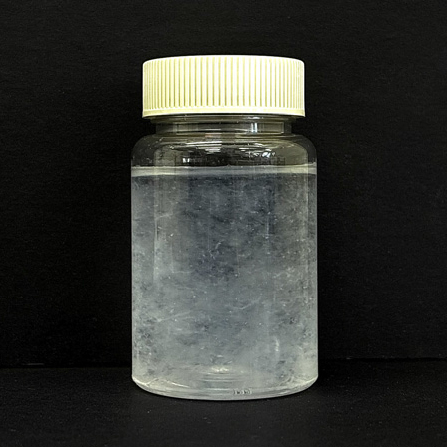
- This study aimed to develop a production process for cellulose nanofibrils (CNFs) derived from sea squirt tunics and to evaluate the feasibility of their surface modification for functional applications. Sea squirt tunics, which contain highly crystalline animal cellulose known as tunicin, were utilized as a sustainable marine biomass resource for CNF production. To enhance nanofibrillation efficiency, enzymatic pretreatment with cellulase was performed at varying enzyme dosages, and the effects on fiber morphology and physicochemical properties were systematically investigated. The results revealed that increasing the cellulase dosage progressively loosened the entangled fiber network of the tunic fibers and reduced the fine content. Among the tested conditions, a cellulase dosage of 5.0% was identified as the most effective for promoting nanofibrillation and was subsequently selected for high-pressure homogenization at 30,000 psi for 50 passes. The resulting enzymatically treated CNF (EN-CNF) exhibited nanoscale fiber dimensions, with an average fiber width of 18.21 nm. To further enhance the functionality and industrial applicability of the produced CNFs, quaternization and carboxymethylation reactions were performed to prepare cationic quaternized CNF (Q-CNF) and anionic carboxymethylated CNF (CM-CNF), respectively. Field-emission scanning electron microscopy (FE-SEM) analysis confirmed successful nanofibrillation in all samples, with average fiber widths of 17.36 nm for Q-CNF and 15.61 nm for CM-CNF. Zeta potential measurements further confirmed the successful introduction of surface functional groups, as Q-CNF exhibited a strong positive surface charge (+41.1 mV). In contrast, CM-CNF displayed a negative surface charge (-22.0 mV). Although the carboxymethylation efficiency of tunicate-derived cellulose was lower than that typically reported for plant-derived cellulose, likely due to its high crystallinity and the presence of residual protein components, the results demonstrated the feasibility of producing surface-modified CNFs from sea squirt tunics. These findings highlight the strong potential of sea squirt tunics as a sustainable marine biomass resource for the production of high-value nanocellulose materials, while simultaneously promoting the recycling and valorization of marine waste. - COLLAPSE
-
Development of a Cellulose Nanofibril Production Process from Sea Squirt Tunics
-
Original Paper
-
Effects of Biofiber Mixing Ratio and Processing Conditions on the Physical Properties of Paper Mulberry-Based Machine-Made Hanji
닥나무 인피섬유와 생분해성 바이오 섬유의 배합비 및 공정 조건이 기계한지의 물리적 특성에 미치는 영향
-
Sung Hoon Kang, Yong Chan Ju, Young Jae Choi, Hyun A Lim
강성훈, 주용찬, 최영재, 임현아
- This study investigated the effects of the degree of beating, biofiber mixing ratio, and addition of a dispersant on the physical properties …
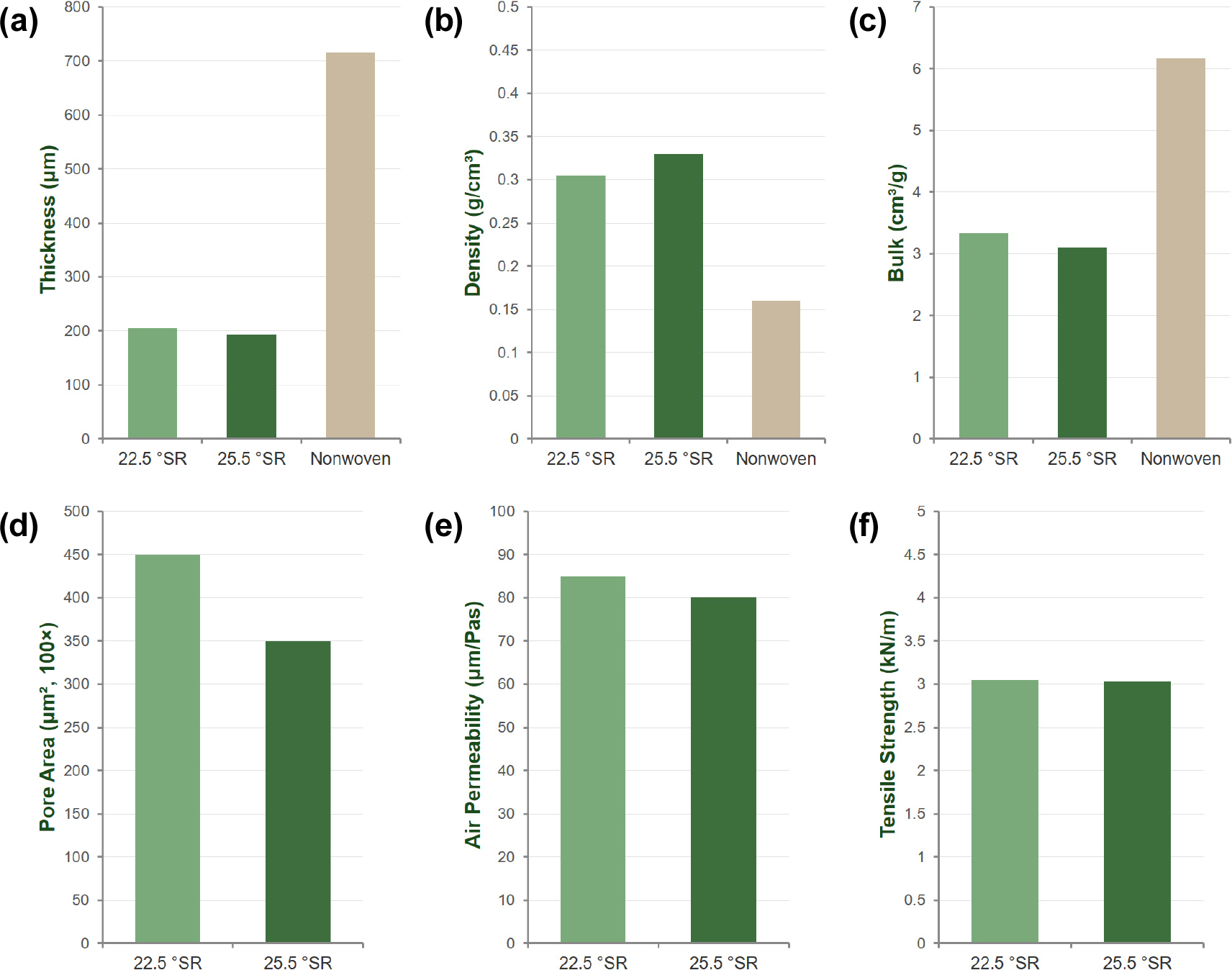
- This study investigated the effects of the degree of beating, biofiber mixing ratio, and addition of a dispersant on the physical properties of machine-made Hanji prepared by blending long paper mulberry fibers with biodegradable biofibers such as PLA, Alginate, Rayon, and Tencel. The optimal beating degree (22.5 °SR) maintained an open fiber network with a bulk of 3.10 cm3/g, a tensile strength of 3.10 kN/m, and an air permeability of 85 µm/Pas. Tencel (1.7 denier) exhibited the highest tensile strength due to its fine denier and hydrophilic surface, which promote hydrogen bonding with paper mulberry fibers. As the biofiber content increased, thickness and bulk increased, while density and tensile strength decreased. The optimal laboratory-scale ratio was determined to be 8:2 (paper mulberry:Tencel, w/w) at 50 g/m2. For field-scale machine papermaking, the ratio was adjusted to 6:4 (w/w) at 90 g/m2 to resolve flocculation issues and ensure stable production. Biodegradability testing (KS M ISO 14855-1:2012, 45 days) showed 104.5% for Sinbiji (6:4, w/w) and 85.4% for Tencel Crepe Hanji (5:5, w/w). Chemical safety tests confirmed non-detectable levels of aromatic amines and formaldehyde, and the combustion toxicity index (R = 0.03) was well below the safety threshold, supporting the application of these materials in hygiene products, construction materials, and industrial filters. - COLLAPSE
-
Effects of Biofiber Mixing Ratio and Processing Conditions on the Physical Properties of Paper Mulberry-Based Machine-Made Hanji

 Journal of Korea TAPPI








Korea Technical Association of The Pulp and Paper Industry
한국펄프종이공학회
Korea Technical Association of the Pulp and Paper Industry Suite 701, Chungmu Bldg., 7 Yeouidaebang-ro 69-gil,Yeongdeungpo-gu, Seoul 07333, Korea
Tel: +82-2-786-8620 / Fax: +82-2-786-8621 / E-mail: editor@ktappi.or.kr Copyright© Korea Technical Association of The Pulp and Paper Industry. Powered by APUB
한국펄프종이공학회
Korea Technical Association of the Pulp and Paper Industry Suite 701, Chungmu Bldg., 7 Yeouidaebang-ro 69-gil,Yeongdeungpo-gu, Seoul 07333, Korea
Tel: +82-2-786-8620 / Fax: +82-2-786-8621 / E-mail: editor@ktappi.or.kr Copyright© Korea Technical Association of The Pulp and Paper Industry. Powered by APUB